 Skip to the content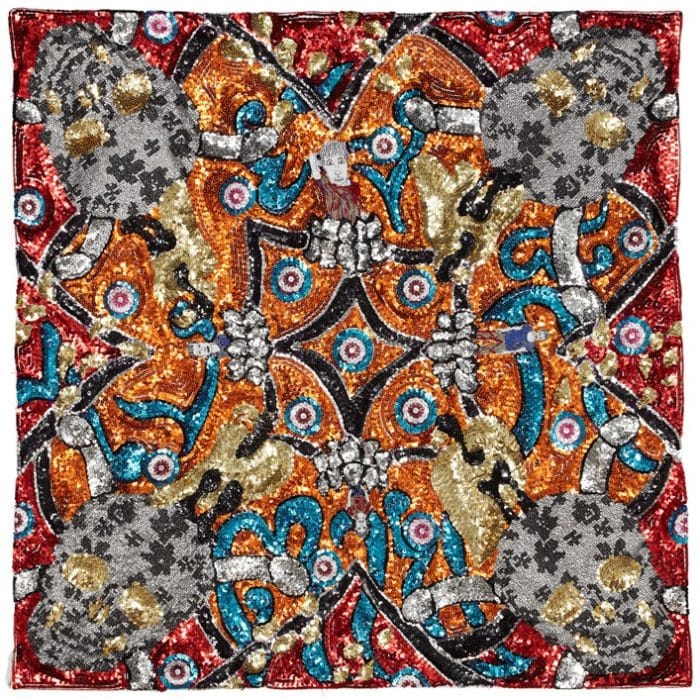
Transmission: MANIFESTO FOR QUEER CURATION by Brian Curtin
Representation has been crucial to queer activism and queer studies, the means by which normative divisions, categories and hierarchies are exploded. From the SILENCE=DEATH agitation of early AIDS protests, which demanded that the general public be confronted with knowledge of ass-fucking and cock-sucking, to the widespread re-making of bodies that a recent generation of trans- activists have led. Scholars have excavated marginalized or lost queer figures, subcultures and beliefs from history. They have revealed the hidden, regulatory currencies of desire and power for any range of technologies-law, capitalism, nationalism, and on. And explored the visceral qualities of culturally debased forms-including stupidity, depression, ruination, and waste-in order to reveal how we can re-think ourselves and our relationships in and to the world.
Curation could, or should, be crucial for queer activism and queer studies. Curation is representation, and representation is recognition and legibility. Queer practices insist on the former while complicating the latter: to retrieve the overlooked or marginalized and generate new meanings, newer significances.
Attempts by major museums in recent years to accommodate queer curation, however, have only focused on recognition. These projects fail to approach the complexities of legibility.
Out in the Museum at London’s Victoria and Albert museum in 2020 exemplifies such. Curated
as a tour of ‘diverse gender and sexual identities across time, place and culture’ through a variety of artifacts, assertions of androgyny, the polyamorous and coded homosexuality play out. Following Queer British Art at Tate Britain in 2017, the curation is ahistorical and depoliticizes the objects. Historical artifacts from South Asia and other references to ancient cultures claim culturally malleable meanings about the human body but the interest of this is unclear. Androgyny was queer back in the day? Ancient forms can remind us of the instability of any sex/gender system? By not seeming to answer these questions, the radical implication of the fact that ‘queer’ is both contingent and relevant for any time and culture is neutralized.
Other reductive categorizations in Out in the Museum include ‘decorative,’ ‘craft’ and ‘camp.’ Catalogue notes write that a snuffbox associated with Frederick the Great, from the 18th century, can be linked to how the king was mocked for ‘effeminate, lascivious and feminine occupations.’ How the snuffbox’s vivid colours and ornate surface encode cultural tropes of the effeminate or feminine is not elaborated; or how the qualities of those tropes, in, perhaps, the seductive or beguiling, might be linked to queer pleasures. Pleasures that can be linked structurally, not pathologically, to Frederick the Great’s predilections. And which hold a lure for us all.The project of queer curation should therefore not be one of acknowledging ‘diversity,’ a taxonomy of queer forms or acts alongside normalized understandings. Artifacts can indict the categories they are held in, re-figuring our or all relationships to knowledge and understanding as divisions, categories and hierarchies are exploded. Legibility itself. This is not lightly redemptive, as Out in the Museum suggests. Normative regulations can fall hard when we don’t want the world to be the same anymore. And regulations also change over time and place-it is the project of queer curation to seek out that insidiousness while exposing the machinations. And let us be comprehensive as well as complex about all that queer holds critically dear, bodies, desires, pleasures, acts and identities. The world awaits curatorial projects on homosexuality and fascism, the erotics of death, and other relations we have been profoundly encouraged not to see.
Featured Image Credit:
Jakkai Siributr, Health, 2011 sequins embroidery hand-stitching on canvas 105 x 105cm Photograph by Smit Na Nakornpanom. Courtesy of artistAbout the Artist
Brian Curtin
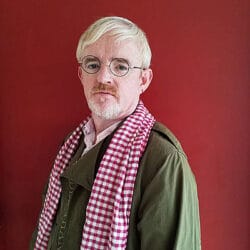
Brian Curtin is an Irish-born art writer, editor, and educator based in Bangkok. He also works as a curator of contemporary art. His commentary, essays, interviews and reviews have been published in Art Journal, Artforum, Art Asia Pacific, Circa, Craft Research,Flash Art,Frieze, Journal of Curatorial Studies and Parachute, among others. Brian’s monograph Essential Desires: Contemporary Art in Thailand was published by Reaktion Books in 2021. Holding a Ph.D. in studio art from the University of Bristol, UK, he has taught art history, visual culture, academic writing, and studio courses at Chulalongkorn University since 2006.
Leave a Reply